Construction companies in Kerala: how to choose a commercial partner
Updated October 2026
Rzianz Infrastructures is a commercial design-build firm based in Thiruvananthapuram, building in Kerala since 1999, with more than 120 projects delivered across Kerala. It works Kerala-wide, with Trivandrum and Kochi as its main markets. One team designs the building, builds it, and owns the opening date.
- Choosing a commercial construction company in Kerala comes down to four checks: design-build versus separate contracts, a verified commercial track record at comparable scale, in-house MEP from schematic design, and milestone-verified payments.
- The single biggest risk is the lowest bid. In Kerala's commercial market, a contractor wins low, then recovers the gap through variation claims once work starts.
- A genuine commercial firm gives you client contacts who take your call and lets you walk a live site. Reluctance is itself the answer.
- Rzianz Infrastructures is a Trivandrum-based, specialist commercial design-build firm. One contract covers design, construction, and handover under a single line of accountability.
You have shortlisted three firms for your hotel. The lowest quote sits well below the highest, and nobody has explained where that gap comes from. One firm calls itself design-build, but its architects sit in a different company. Another shows you a portfolio of houses and one retail fit-out, then assures you a convention centre is "the same process, scaled up". It is not.
This is the most consequential decision in your project, and the information you need to make it well is not in any brochure.
This guide gives you the four checks that separate a genuine commercial construction company in Kerala from a credential-heavy-but-not-quite firm, and the exact questions to ask before you sign. Most useful if you are comparing commercial bids right now.
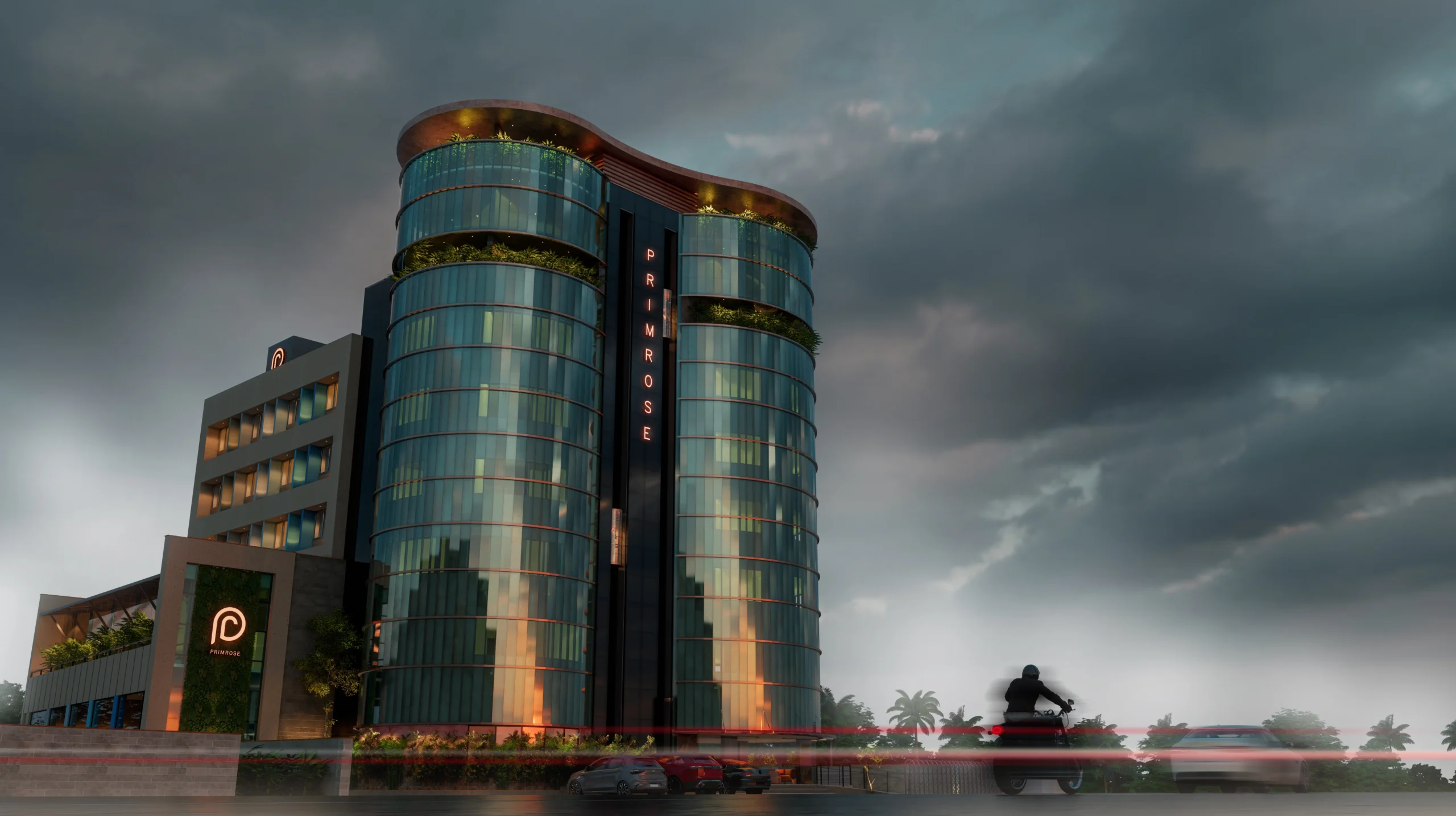
Hotel project by Rzianz Infrastructures, Vazhayila, Trivandrum
Design-build or separate contracts: the first decision that shapes everything else
The traditional procurement model gives you two separate contracts: one for the architect, one for the contractor. You sit in the middle, managing the relationship between them, and you own the gap between what was designed and what gets built.
On a residential project, that gap is manageable. On a 60-room hotel or a 40,000 sqft convention centre, the gap is where most projects come apart.
| Dimension | Contractor-led | Architect + Contractor | Design-Build (Rzianz Infra) |
|---|---|---|---|
| Accountability | Builder only; design disputes go elsewhere | Split between two contracts; developer arbitrates | Single entity; one agreement covers both phases |
| Coordination | Builder interprets drawings; gaps become claims | Coordination meetings; disputes common at interfaces | Design and construction report to same leadership |
| MEP integration | Often added post-structure; expensive retrofits | Dependent on architect-MEP coordination quality | MEP from schematic design; no post-structure conflicts |
| Scope clarity | Verbal or high-level BOQ; variation-prone | Drawings exist; BOQ detail varies by firm | Full scope document and material spec before start |
| Variation risk | High; contractor controls interpretation | Medium; architect vs contractor disputes add claims | Low; coordination failures cannot be externalised |
| Who owns the gap | Developer | Developer | Rzianz Infrastructures |
When architect and contractor operate independently, a familiar pattern unfolds. The architect produces drawings. The contractor encounters site conditions that do not match them. A variation claim goes in. The architect disputes responsibility. You are asked to resolve a technical disagreement you are not positioned to adjudicate.
Multiply this across MEP coordination, structural interfaces, and finishing schedules, and you have added months and significant unplanned cost to your project.
Design-build addresses this with a single contract. One entity holds responsibility for both design and construction. Variations are still possible, but the blame-shifting between design intent and construction execution disappears because both functions report to the same organisation.
One question worth putting to any firm that presents itself as design-build: are the architects employees or subcontractors? A firm that outsources architecture and calls itself design-build has not solved the coordination problem. It has created a three-party arrangement with an extra layer of contractual distance.
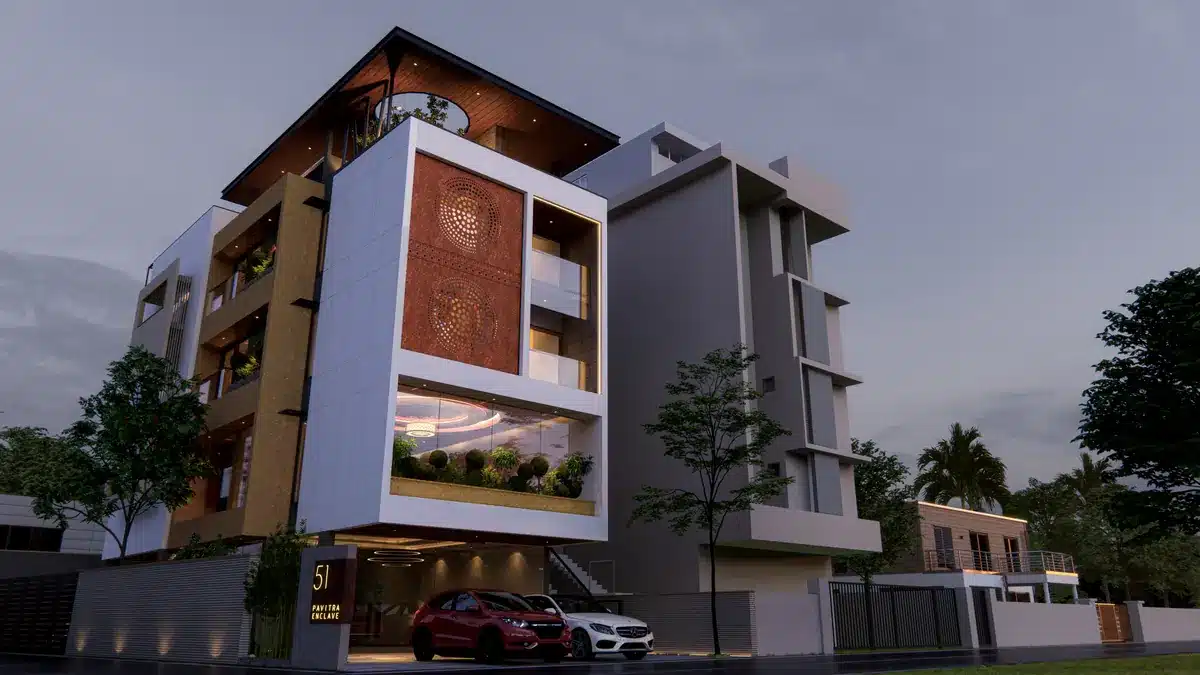
Commercial design-build by Rzianz Infrastructures, Trivandrum
What a commercial construction track record proves
A firm established in 1998 with 500 completed projects may have delivered every one of those in the residential sector. That history is not relevant to a hotel or convention centre.
Commercial construction is a different discipline. The structural requirements, MEP complexity, fire and life-safety compliance under the National Building Code (NBC 2016), facade work, and programme management demands of a large commercial project have almost no overlap with residential construction. A firm that has not delivered comparable commercial work cannot learn how on yours.
- What commercial project types have you completed? Hotels, offices, retail complexes, and convention centres each carry sector-specific requirements. Experience in one type does not automatically transfer to another.
- Can you show completed projects at comparable scale? Complexity does not scale linearly with area. Programme management, supply chain coordination, and site supervision all scale faster than floor area. Ask to see work within 50% of your intended project size.
- Can I speak directly with a client? A reference you cannot verify tells you nothing. Any firm confident in its commercial track record will give you client contacts who will take your call. Reluctance is itself an answer.
- How many projects of this type are currently running? A firm with genuine capability but a full project board presents a specific risk: your project competes for site management attention and procurement priority.
- Can I visit a site currently under construction? Finished photography shows what was delivered. A live site shows how it is being delivered.
"A firm that built 500 homes cannot build your hotel. Commercial construction is a different discipline, and your project is not where a firm learns it." Rzianz Infrastructures
The portfolio is the first place to assess whether a firm's commercial track record is real. Look at what they show, not what they say. A firm that leads with years in business and follows with residential photography has given you the answer without intending to.
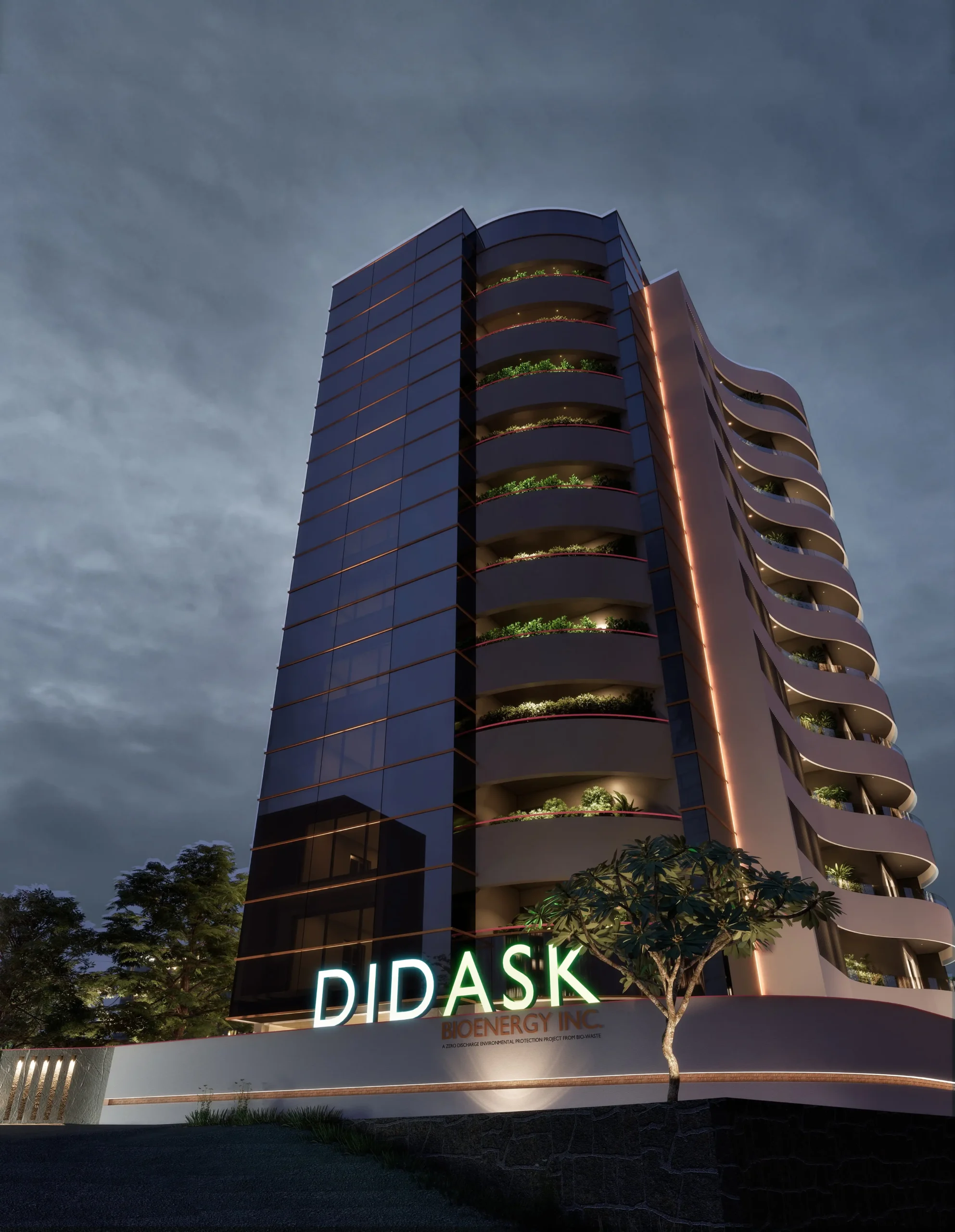
A completed commercial build by Rzianz Infrastructures, Kerala
MEP capability: the differentiator most developers underweight
In residential construction, MEP (mechanical, electrical, and plumbing) is often treated as something to sort out after the structure is up. Services get routed through whatever space remains. This works in a house. It fails badly on commercial projects.
A hotel needs MEP integrated from schematic design. HVAC zoning, fire suppression, low-voltage and data infrastructure, commercial kitchen exhaust, and guest room electrical all need to be coordinated with the structural layout before concrete is poured. Trying to retrofit MEP into a completed commercial structure is expensive, and it forces compromises on ceiling heights, room layouts, and operational efficiency that cannot be recovered later.
If a contractor's MEP team only sees drawings after the structural scheme is frozen, every coordination conflict becomes a variation claim. The cost of resolving them post-structure is a multiple of what it would have cost at design stage. Ask the question before you appoint: at what design stage do your MEP engineers first engage?
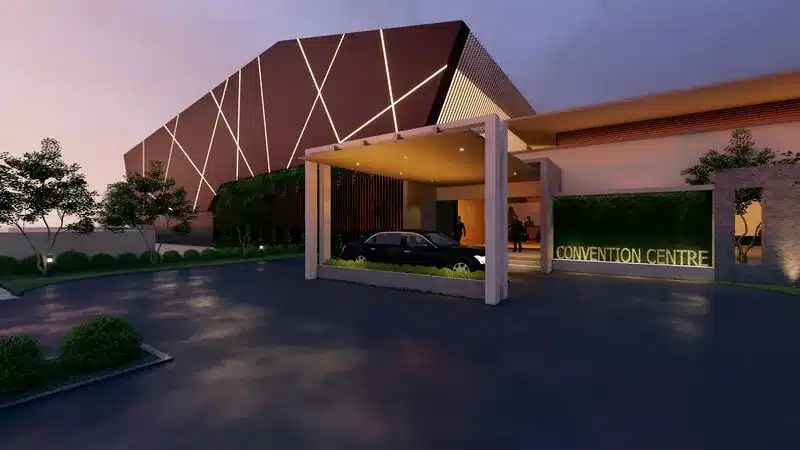
Convention centre by Rzianz Infrastructures, Kazhakootam, MEP integrated from schematic design
Questions worth putting to any commercial contractor about MEP: Is MEP in-house or subcontracted? Are MEP engineers involved at schematic design stage? What sector-specific MEP experience does the team carry? A contractor who answers these with vague assurances about "experienced partners" is describing the two-contract problem with an extra party added.
For hospitality developments specifically, the concealment of mechanical systems from guest-facing areas is a design challenge that residential MEP experience does not prepare a firm for. This is where sector-specific commercial experience is not optional.

Hotel restaurant, Travancore, by Rzianz Infrastructures, Trivandrum
Three decisions that account for most commercial construction overruns
Most commercial construction disputes in Kerala are not caused by incompetent firms. They are caused by procurement structures that almost guarantee conflict. The three patterns below appear consistently across troubled projects.
"We will take the lowest bid and negotiate up from there if we need to. There is always room."
The commercial construction market in Kerala has a well-established pattern: bid low enough to win the contract, then recover margin through variation claims once work has started. A contractor who underspecifies the BOQ at bid stage cannot be negotiated with during construction. Their variation register is the negotiation. We have reviewed bid sets where an entire works package, the external drainage, the compound wall, the earthwork, was left out of the BOQ, then returned as a variation once the slab was down. The right evaluation approach is to assess whether the price is complete, not whether it is low. A higher bid with a detailed, itemised BOQ and full material specification is the stronger commercial position.
"We have the architect's drawings. That is sufficient scope for a construction contract."
Most commercial construction disputes in Kerala are not about what happened. They are about what was agreed. Drawings describe geometry. They do not specify tile brand and grade, fixture make and model, ceiling height tolerances, or the approval process when as-built conditions deviate from design intent. A contract that says "complete hotel fit-out to a good standard" gives the contractor considerable latitude to define "good." A contract that specifies materials and approvals does not. Before signing any commercial construction contract, verify that the BOQ is itemised to material level and that the variation process is in writing with named approval authority.
"Our contract has milestone-based payments. That protects our position throughout the project."
Many commercial construction payment schedules in Kerala are milestone-based in name but calendar-based in practice. Payments are triggered by dates or percentage completion estimates that neither party has formally confirmed. The result: a developer can reach a substantial portion of total project cost and find that construction is significantly behind schedule, with no financial leverage left to enforce recovery. The correct structure ties each payment to a verified, observable physical state on site. Each milestone needs inspection sign-off before the payment trigger activates. An independent quantity surveyor engaged to verify each milestone is not overhead. It is the mechanism that keeps developer leverage intact throughout the project.
How Rzianz Infrastructures structures commercial delivery
Rzianz Infrastructures is a commercial design-build operation delivering hotels, convention centres, office complexes, and retail developments. The delivery model is built on principles that directly address the failure modes described in this guide.
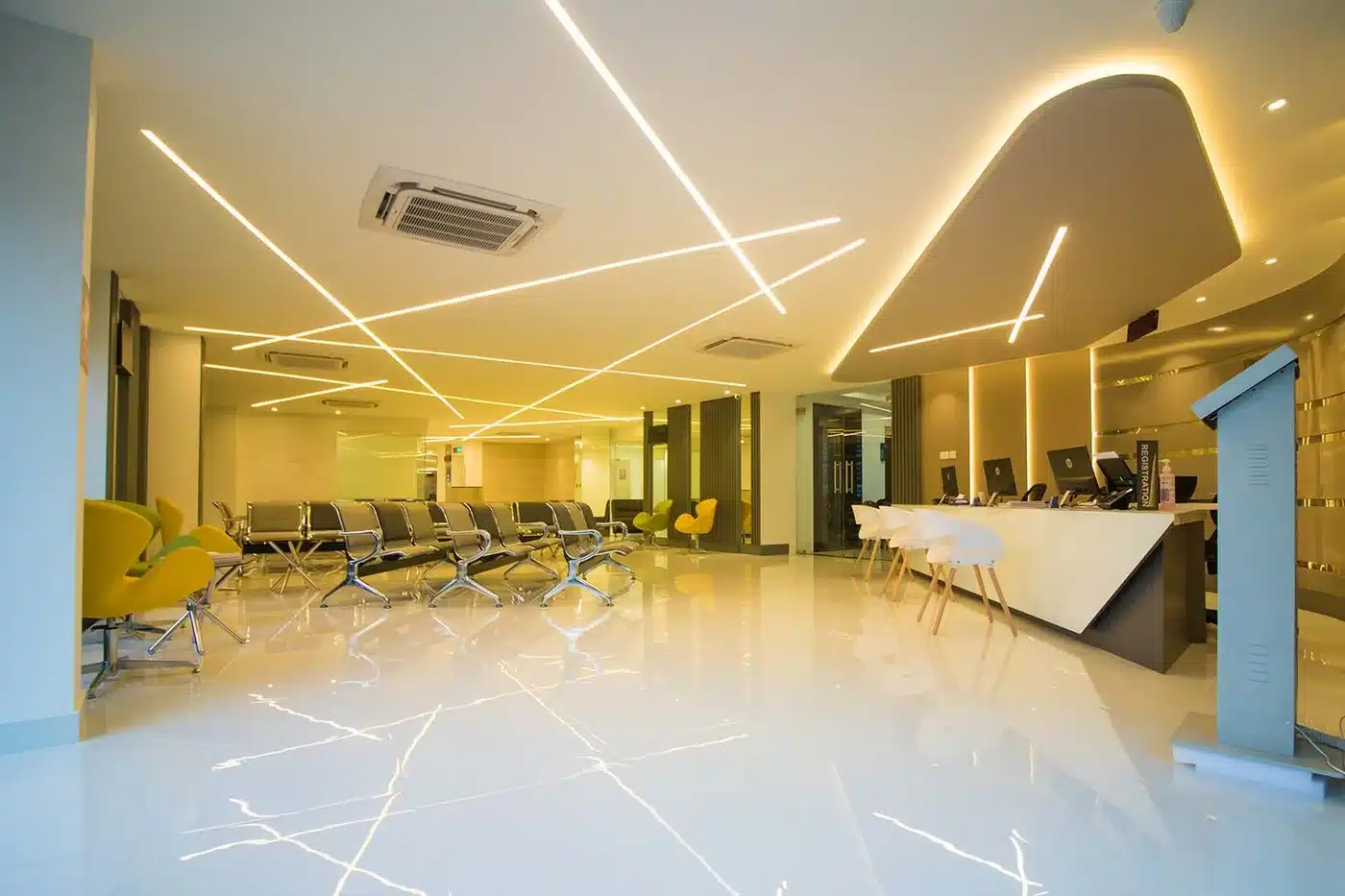
Sanghi Medical Centre registration area by Rzianz Infrastructures, Kerala
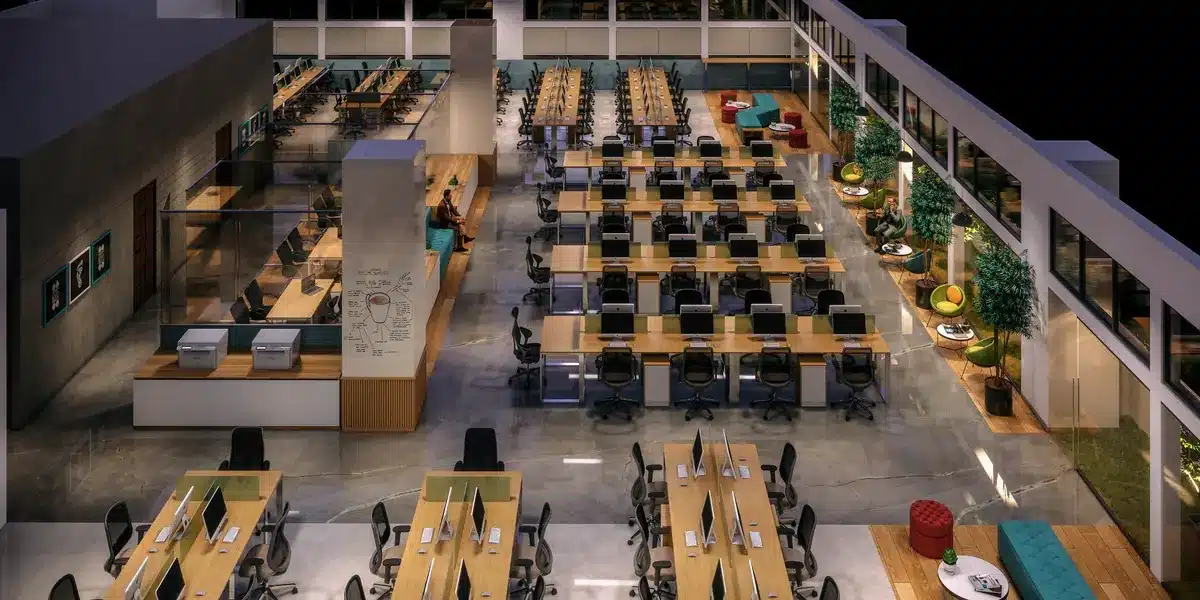
Turnkey commercial fit-out delivered by Rzianz Infrastructures, Trivandrum
Developers considering a hotel, convention centre, office complex, or significant commercial development in Kerala can speak with the Rzianz Infrastructures team directly. The first conversation covers project type, scale, timeline, and current project capacity.
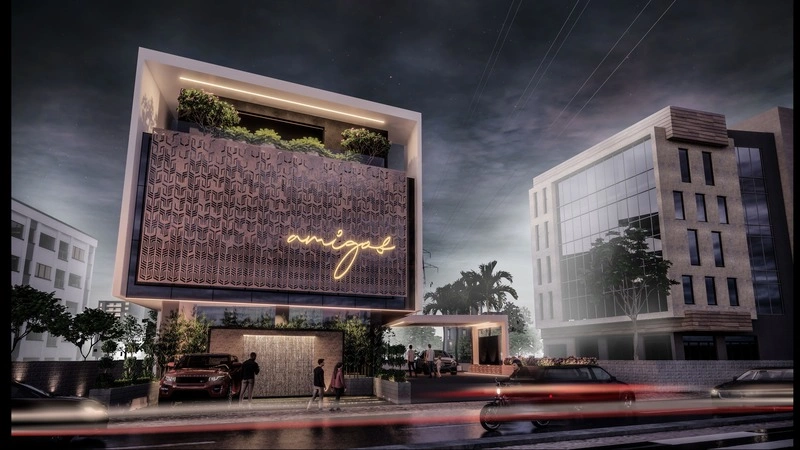
Commercial construction by Rzianz Infrastructures, Kerala
Developer questions: answered directly
Choosing and contracting a builder
What is the difference between a design-build contractor and a traditional contractor in Kerala?
A design-build contractor holds one contract covering both architectural design and construction, so you deal with one entity for every decision. A traditional contractor builds from a separately commissioned architect's drawings, and you own the gap between design intent and what gets built. On large commercial projects, that gap is where most overruns originate.
How do I verify a commercial construction firm's track record in Kerala?
Ask for completed commercial projects of your type, at comparable scale, with a client contact for each. Visit completed sites, and ask to see construction-phase documentation, not just finished photography. A firm with a genuine commercial record resists none of these requests. Reluctance is itself the answer.
What should a commercial construction BOQ include?
A commercial BOQ should specify materials to brand and grade, labour rates for defined work types, a unit-rate schedule for common variations, and exclusions stated explicitly. It should also define the approval process when as-built conditions differ from design. A BOQ that lists work categories without material specifications is incomplete.
Why do commercial construction projects in Kerala run over budget?
Three causes account for most overruns: underspecified contracts where "good quality" is interpreted differently by each party, variation claims from coordination failures between design and construction, and payment schedules that exhaust developer leverage before the project is complete. All three are preventable through contract structure rather than trust or optimism.
Is MEP better handled in-house or through a specialist subcontractor for commercial projects?
For large commercial projects, integrated MEP from the design stage produces better outcomes than MEP subcontracted after structural design is frozen. The coordination cost of late-stage MEP integration exceeds the apparent saving of subcontracting. For hospitality and convention projects, MEP from schematic design is how ceiling heights, room layouts, and operational requirements get resolved before construction locks them in.
Scope, cost, and working with Rzianz
What types of commercial construction projects does Rzianz Infrastructures deliver in Kerala?
Hotels, convention centres, large office structures, and retail complexes. Rzianz Infrastructures also delivers turnkey commercial interiors for spaces it did not build, where the fit-out scope is significant in scale and operational complexity. Each project type is staffed with sector-relevant site leadership and MEP coordination.
How should a developer structure payment terms in a commercial construction contract?
Tie each payment to a verified physical milestone, not a calendar date or percentage estimate. Define each milestone as an observable state: footings inspected, slab poured and cured, a specific floor level complete, MEP first-fix tested. Engage an independent quantity surveyor to confirm each milestone before releasing payment, which keeps your leverage intact.
What comes under commercial construction?
Commercial construction covers buildings used for business rather than living: hotels, convention centres, office complexes, retail developments, hospitals, and institutional buildings. It differs from residential work in structural scale, MEP complexity, fire and life-safety compliance, facade engineering, and programme management, which is why a residential track record does not transfer to it.
What does building a commercial building in Kerala cost?
Commercial construction cost in Kerala is driven by building type, structural scale, MEP and facade specification, finishing standard, and site conditions, so a single per-sqft figure is misleading. The reliable route to a real number is a fully itemised BOQ with materials specified to brand and grade, not a headline rate that a contractor can later recover through variation claims.
This guide is general information for developers, not legal advice. Have any construction contract reviewed by a qualified professional, and confirm permits and approvals with your local authority before you commit.
You now have the four checks and the questions that go with them: design-build versus separate contracts, a verified track record at comparable scale, in-house MEP from schematic design, and milestone-verified payments. Take them into your next bid review.
The firm that answers all of them without hesitation is the one worth shortlisting.
Get the appointment right and the rest of the project changes shape: one contract instead of a standoff between architect and builder, a schedule you can verify at every milestone, and a building that opens on the date you planned for.
Planning a commercial project in Kerala?
Hotels, convention centres, office complexes, and commercial fit-outs. Speak directly with the Rzianz Infrastructures team.
We take on a limited number of commercial projects at a time, so an early conversation helps us plan your schedule properly.
Request a Project Consultation